About thirteen years ago, we linked to a piece of neurophysiology software called SpikeHound on our website. It let students and researchers record and analyze neural spikes in ways that classroom software usually could not. We linked to it, moved on, and honestly, kind of forgot about it.
SpikeHound did not disappear.
The first version of the software was created for researchers at HHMI’s Janelia Research Campus, shortly after Janelia opened, by Gus Lott, who had developed the project out of his PhD work at Cornell. For years, SpikeHound was also used in Cornell’s neurophysiology teaching lab, until the original software became harder and harder to support without major updates.
Now it is back.
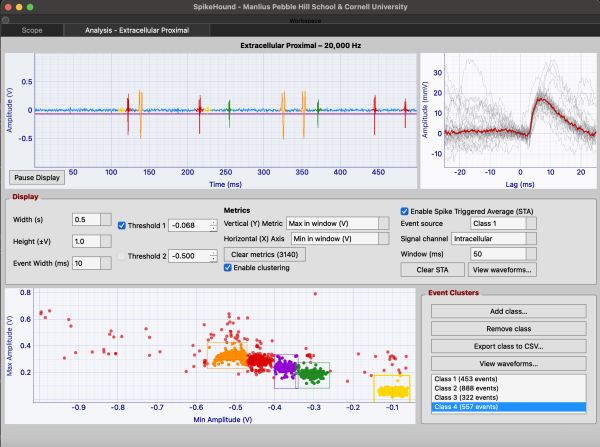
Last December, we heard from Gus again. He is now a Computer Technology teacher at Manlius Pebble Hill School in Syracuse, NY, and he had been rewriting SpikeHound from scratch as a modern Python application. Not just updated. Rebuilt. With a native driver for our Neuron SpikerBox hardware, real-time digital filtering, live spike sorting, and cross-channel event correlation for conduction velocity analysis.
The new version, SpikeHound 2.0, is free and open source, released under a highly permissive license, and designed with a very modern idea in mind: a non-programmer should be able to point an AI coding assistant, like Claude Code or OpenAI Codex, at the project and ask for new features.
That is not a small philosophical shift. It means the tool is not only open source in the traditional sense. It is built to be extended by teachers, students, and researchers who may not think of themselves as software developers.
And yes, the software was written with AI assistance, with contributions from Gus’s high school students, including Taylor Mangoba, whose name appears in the author line of the code.
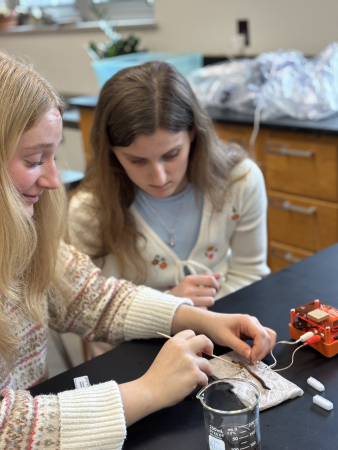
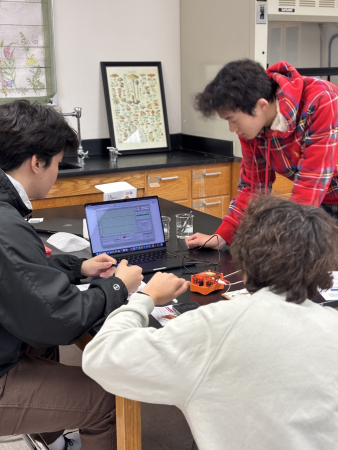
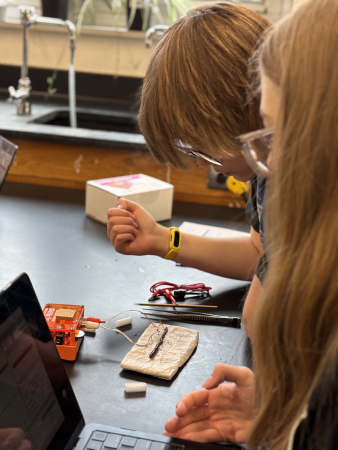
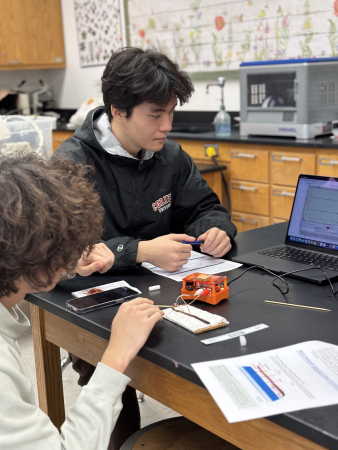
Here is what that actually looks like in practice. Gus’s class ran a semester-long neuroscience course this spring, the kind that starts with how neurons fire and ends with students connecting biological neurons to artificial ones. When the class reached the perceptron lecture, the foundational building block of artificial neural networks, the students had already spent weeks recording real spikes from real nervous systems. The bridge between “this is how a neuron works” and “this is how a neural network works” did not need much explaining. They had seen it.
Meanwhile, the same SpikeHound 2.0 software is being beta-tested at Cornell in their BioNB491 Neurophysiology lab course. This week, Gus’s class is getting on a bus to Cornell. His high school students will attend a research symposium with Cornell neuroscience graduate students, then tour the lab.
“It’s really special to be able to work with this equipment and learn about the brain. Instead of just seeing a YouTube video or something of somebody doing an experiment, we get to experience it firsthand.”
Lola, Manlius Pebble Hill School student
That’s exactly the point. SpikeHound 2.0 fills a real gap in the neuroscience education toolkit. Most classroom software tops out before you get to anything resembling actual research-grade analysis. Professional platforms like Spike2 cost serious money and require serious training. SpikeHound 2.0 sits in between: free, open-source, and now built to talk directly to a SpikerBox. It’s the kind of tool that lets a motivated high schooler do something that looks a lot like real science. Because it is.
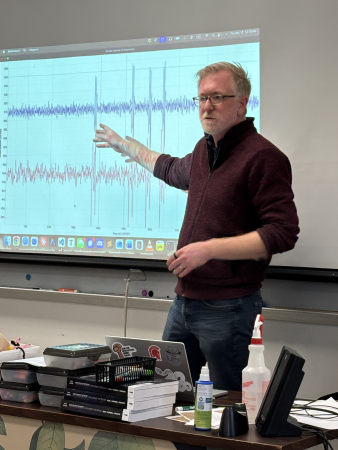
We’re officially welcoming Gus and the SpikeHound 2.0 project into the Backyard Brains ecosystem as a Strategic Partner.
If you’re a teacher, a university lab coordinator, or someone who’s been bumping up against the ceiling of our built-in software, SpikeHound 2.0 is worth a look. And if one of Gus’s students who helped write the software is reading this: that’s a genuinely unusual thing to have on your CV. Well done.